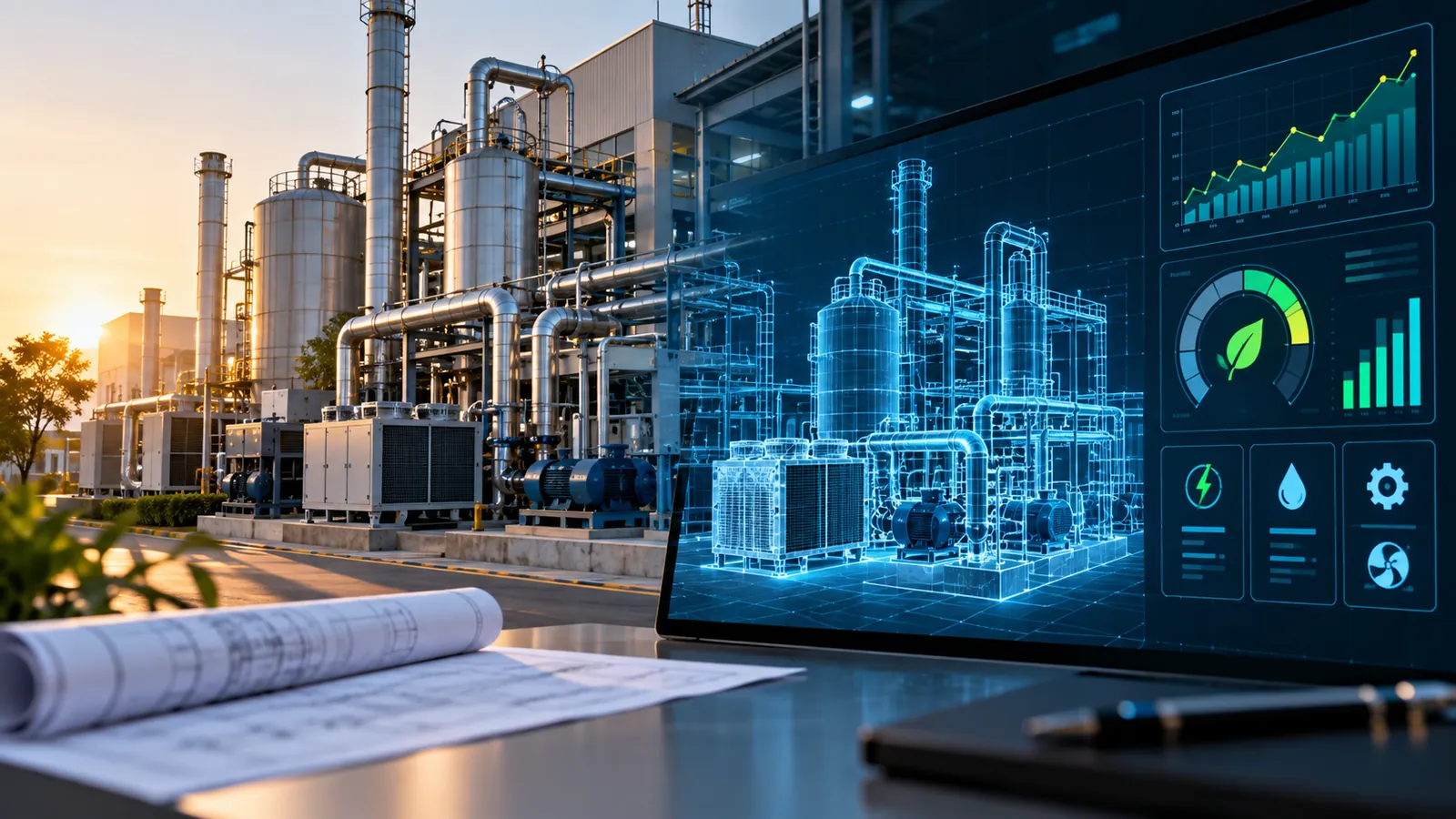
A digital twin is a working model of a system that mirrors real operating data. For energy teams, it can simplify decisions around HVAC schedules, compressed air pressure, boiler loads, and production-linked energy use.
Energy use cases
- Compare expected and actual consumption.
- Simulate set-point changes before implementation.
- Identify abnormal baseloads during non-production hours.
- Track specific energy consumption by product or line.
Data requirements
Useful twins need clean meter data, production data, operating schedules, and asset information. Without these, the model becomes a presentation layer rather than a decision tool.
The best digital twin projects begin with one question: what decision should this model improve?
Practical outcome
When tied to energy audits, digital twins can help verify savings and maintain improvements after recommendations are implemented.
Start with a minimum viable twin
Choose one decision with measurable value, such as chiller sequencing, compressed-air pressure, furnace scheduling, or pump operation. Model only the variables needed to improve that decision. A smaller model is easier to calibrate, explain, and maintain than a plant-wide replica built before anyone agrees how it will be used.
Validate before operators trust it
- Compare predicted and actual behaviour across normal load, low load, and abnormal conditions.
- Document sensor quality, assumptions, exclusions, and the range where the model is reliable.
- Test recommendations with operators and record why a suggestion was accepted or rejected.
- Recalibrate after equipment, controls, products, or operating schedules change.
The practical test is simple: does the model help someone make a faster, safer, or more efficient decision? If it only produces a dashboard, the project has digitised visibility but not improved performance.
Technical Standards & Regulatory References
For digital twin frameworks, energy baseline modeling, and industrial automation standards, refer to:
- ISO/IEC 23247-1:2021: Automation systems and integration - Digital twin framework for manufacturing.
- ISO 50001:2018: Energy Management Systems - Measurement and verification of energy performance baselines.
- IEEE P2806: Standard for Digital Twin Architecture in Smart Manufacturing.
- IEC 62264 (ISA-95): Enterprise-control system integration for industrial automation.
For details on how standards, evidence, and estimates are interpreted across our engineering services, see our Claims, Evidence & Attribution guidelines.