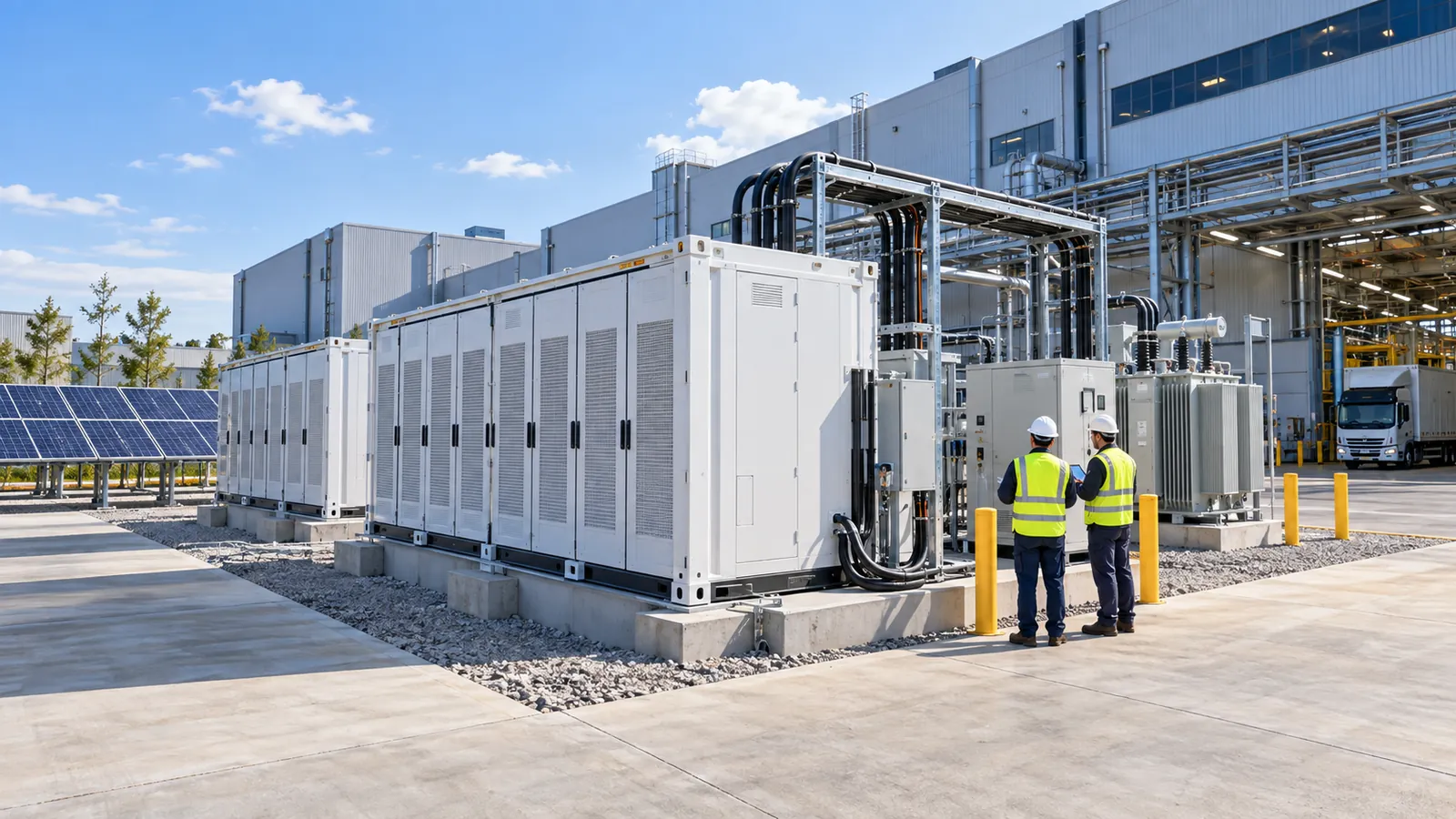
Battery Energy Storage Systems are becoming relevant for factories that face peak demand charges, power quality concerns, DG dependence, or solar intermittency.
Where BESS helps
- Peak shaving during high-demand windows.
- Backup for selected critical loads.
- Solar energy shifting from generation hours to usage hours.
- Reducing DG runtime in specific operating cases.
What to assess first
Plants should review load curves, demand charges, outage history, critical load lists, fire safety provisions, and available electrical space before selecting a battery size.
A battery system should be sized from load data, not from assumptions about total connected load.
Safety and compliance
Battery rooms and containers need proper ventilation, fire detection, isolation, access control, and maintenance planning.
Build the business case from interval data
Use the plant load profile to separate short peaks, sustained demand, essential backup loads, and energy that can be shifted. Then test the intended operating strategy: backup, peak shaving, solar self-consumption, or a combination. Each strategy asks the battery to cycle differently, so the useful capacity and expected life cannot be judged from the nameplate rating alone.
Questions to settle before procurement
- Which loads must remain online, and for exactly how long?
- What reserve will be maintained for an outage after normal daily dispatch?
- How will degradation, ambient temperature, auxiliary consumption, and future expansion be modelled?
- Who owns alarms, emergency response, preventive maintenance, and end-of-life planning?
A credible proposal should show the assumptions behind savings and resilience separately. That makes it possible to compare vendors without treating every promised benefit as if it can occur at the same time.
Technical Standards & Regulatory References
For BESS safety, grid interconnection, and installation standards, refer to the following regulations:
- IS 16893 / IEC 62619: Secondary cells and batteries containing alkaline or non-acid electrolytes - Safety requirements for industrial lithium storage systems.
- CEA Grid Connectivity Regulations (2019 Amendment): Technical Standards for Connectivity to the Grid for Energy Storage Systems.
- NFPA 855: Standard for the Installation of Stationary Energy Storage Systems (Fire protection and thermal runaway management).
- IEEE 2030.2: Guide for the Interoperability of Energy Storage Systems Integrated with Electric Power Infrastructure.
For details on how standards, evidence, and estimates are interpreted across our engineering services, see our Claims, Evidence & Attribution guidelines.