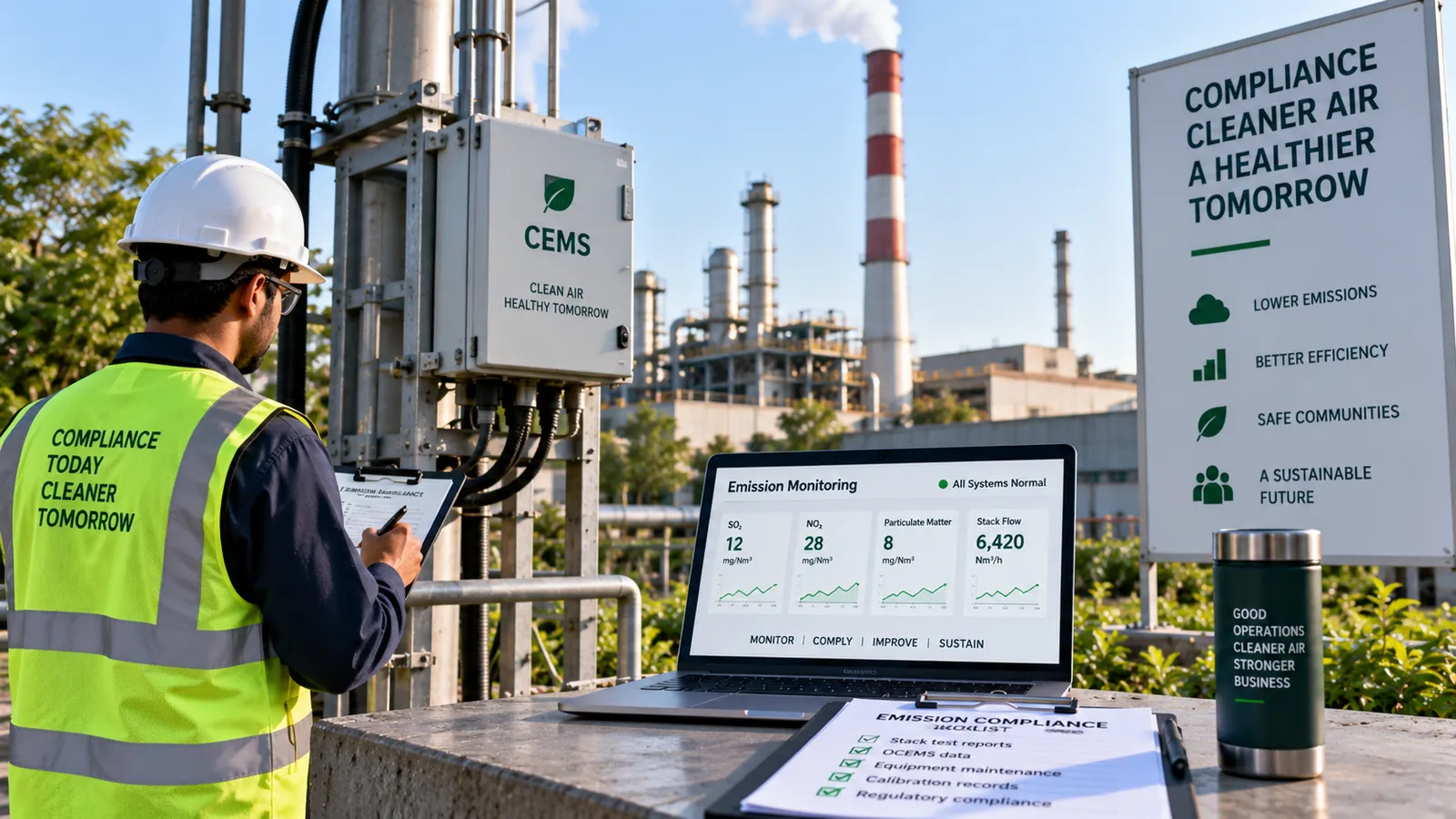
Factories using boilers, DG sets, process stacks, or emission control equipment need a clear monitoring plan. Waiting for inspection season creates documentation pressure and avoidable compliance risk.
What to track
- Stack test reports and sampling dates.
- Fuel type, consumption, and operating hours.
- Emission control equipment health and maintenance logs.
- Calibration records for monitoring instruments.
- OCEMS uptime and data availability where applicable.
Operational controls
Compliance teams should align plant operations, maintenance, and EHS teams so emission sources are operated within approved conditions.
Most compliance gaps are documentation gaps first and technical gaps second.
Review rhythm
A monthly review of emission records helps identify missing reports, equipment issues, and renewal risks before they become urgent.
Create a defensible monitoring workflow
For every emission source, document what is measured, where it is measured, the operating condition during the test, the responsible person, and where the result is retained. Link readings with production rate, fuel, control-equipment status, and maintenance activity. A number without this operating context is hard to explain when it changes and weak evidence during an inspection.
When a reading looks wrong
- Check calibration, sample lines, power supply, analyser alarms, and data availability.
- Confirm whether the process, fuel, load, or pollution-control equipment changed.
- Keep the original reading and document the investigation; do not silently overwrite it.
- Assign corrective action and verify performance after the intervention.
A short exception log often provides more assurance than a perfect-looking spreadsheet because it shows how the site identifies, investigates, and closes abnormal conditions.
Technical Standards & Regulatory References
For industrial stack monitoring, OCEMS specifications, and ambient air standards, refer to:
- CPCB Guidelines for Online Continuous Emission Monitoring Systems (OCEMS): Technical specifications, data connectivity protocols, and sensor calibration standards.
- IS 5182 (Multiple Parts): Methods for measurement of air pollution (SO2, NOx, Particulate Matter SPM/PM10/PM2.5).
- Environment (Protection) Act, 1986 & Rules: Schedule VI General Standards for Discharge of Environmental Pollutants into Stacks and Air.
- CPCB LSO Stack Sampling Guidelines (Methods 1 to 5): Technical protocols for traverse points, velocity, moisture, and particulate sampling.
For details on how standards, evidence, and estimates are interpreted across our engineering services, see our Claims, Evidence & Attribution guidelines.