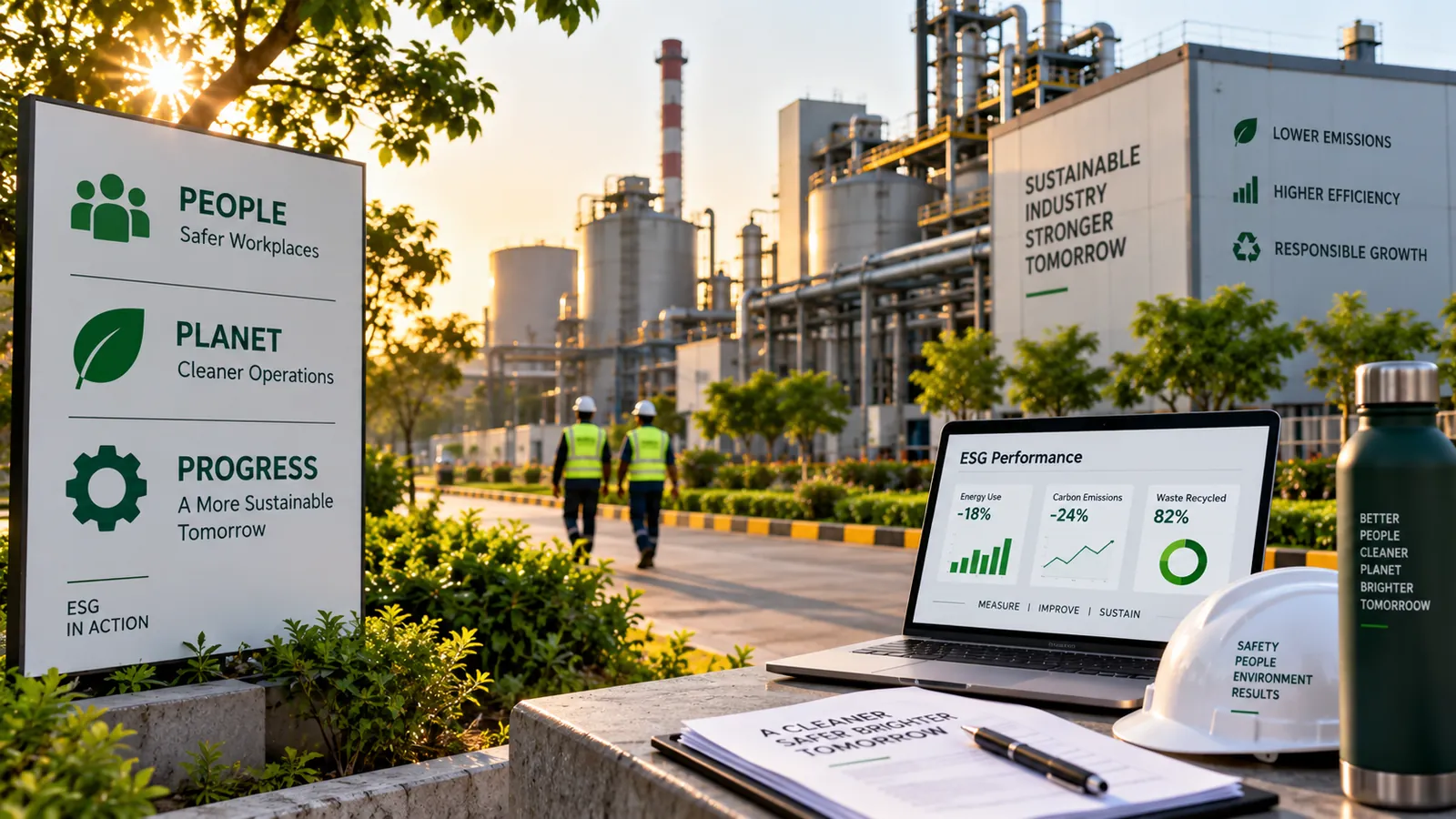
ESG expectations are moving closer to plant-level evidence. Customers, investors, and regulators increasingly expect facilities to support claims with energy, water, waste, safety, and compliance records.
Priority areas
- Carbon footprint baselines with traceable input data.
- Energy audit actions and verified savings.
- Waste segregation, recycling, and disposal documentation.
- Water withdrawal, reuse, and discharge records.
- Safety training, incidents, and corrective actions.
Common mistake
Many ESG reports depend on annual estimates. Industrial sites should move toward monthly data capture so teams can see whether performance is improving.
Audit-ready ESG is built from routine operating discipline, not year-end data collection.
Next step
Start with a gap assessment against current records, meters, statutory documents, and operating logs. Then assign owners for each data stream.
Make every reported number traceable
Define the boundary, unit, source, owner, calculation, review frequency, and evidence for each material metric. For example, an energy total should reconcile invoices, meter readings, on-site generation, and any estimated values. Keep the original source and document adjustments. This creates an audit trail without building a separate reporting bureaucracy.
A useful monthly ESG operating review
- Compare intensity metrics with production and explain meaningful variance.
- Review missing data, expiring permissions, incidents, complaints, and overdue actions.
- Separate measured values from estimates and assign a plan to improve weak data.
- Connect targets with funded projects, accountable owners, and verified results.
Good ESG reporting should help the plant make better operating decisions. If a metric cannot lead to an action, it may need a clearer definition or a more relevant level of detail.
Technical Standards & Regulatory References
For ESG compliance disclosures, GHG quantification, and sustainability management systems, refer to:
- SEBI BRSR Core Framework (2023): Mandatory Business Responsibility and Sustainability Reporting framework for listed entities in India.
- ISO 14064-1:2018: Greenhouse gases - Specification with guidance at the organization level for quantification and reporting of GHG emissions.
- ISO 14001:2015: Environmental management systems - Requirements with guidance for continuous environmental performance.
- GHG Protocol Corporate Standard: Global standardized accounting framework for Scope 1, Scope 2, and Scope 3 industrial emissions.
For details on how standards, evidence, and estimates are interpreted across our engineering services, see our Claims, Evidence & Attribution guidelines.