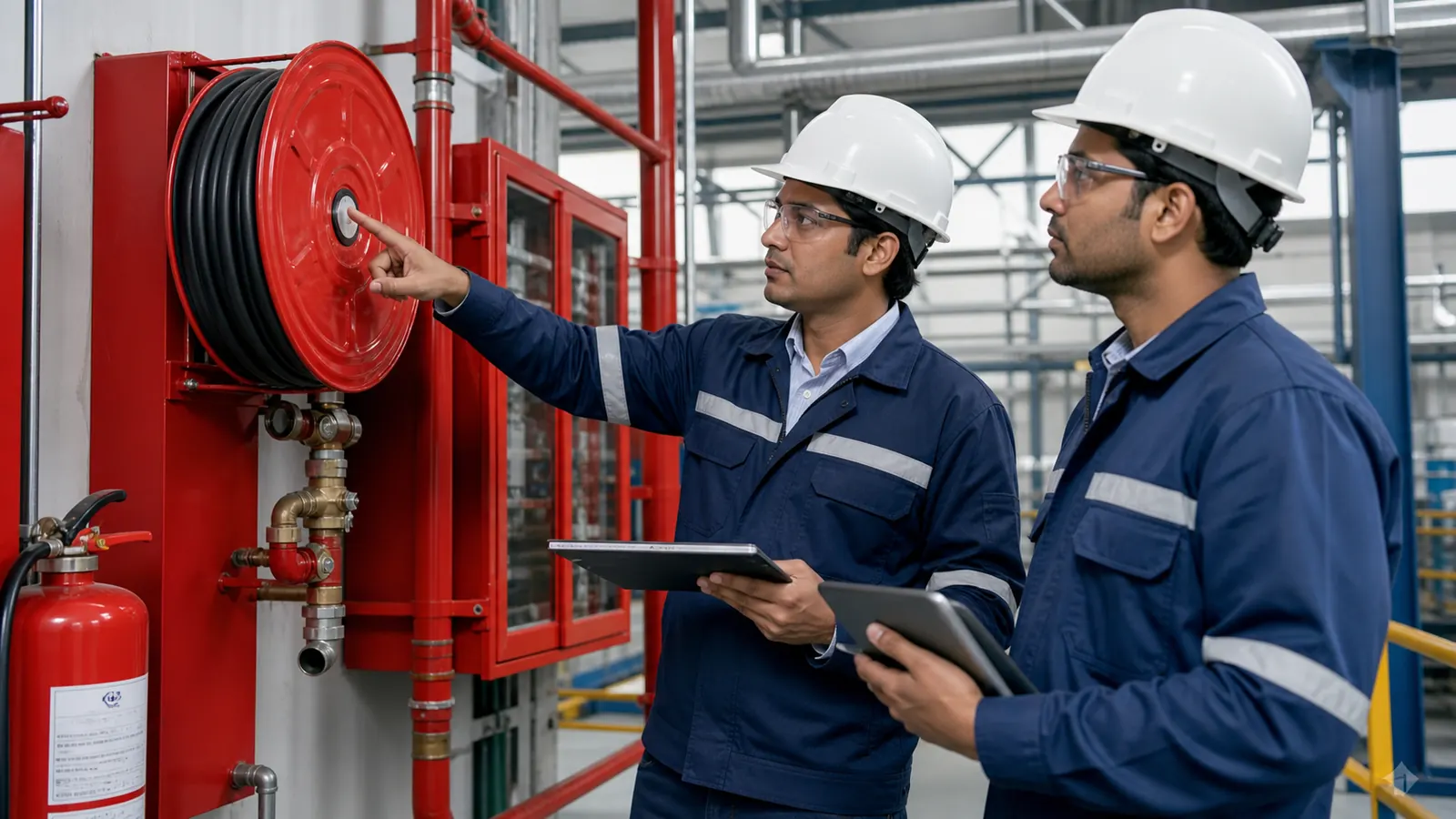
Industry 5.0 builds on automation but asks a wider question: how can technology make industrial work safer, healthier, and more resilient?
Human-centric focus areas
- Ergonomic workstation design.
- Reduced exposure to repetitive strain and hazardous tasks.
- Better incident reporting and learning systems.
- Training that supports both digital tools and safety behavior.
Automation and people
Automation should remove high-risk work, not create new blind spots. Safety reviews must consider machine guarding, emergency stops, LOTO, access control, and operator understanding.
A human-centric factory treats safety data as operational intelligence.
Practical start
Combine HIRA, ergonomics assessment, behavioral safety observations, and near-miss reviews into one improvement plan.
Turn safety data into a shift-level routine
Begin each shift with the few conditions that can change the risk profile: unusual jobs, bypassed safeguards, contractor activity, fatigue, temporary electrical supplies, and equipment under maintenance. Give the shift lead one clear place to record the condition, owner, and expected closure time. This keeps the process useful to operators instead of turning it into another form completed after the event.
Signals that deserve management attention
- Repeated near misses or manual interventions around the same machine.
- Guard, interlock, alarm, or emergency-stop overrides.
- Tasks that depend on memory instead of a visible standard.
- Ergonomic strain, rushed changeovers, and gaps in demonstrated competence.
The strongest Industry 5.0 investment is not necessarily the most automated one. It is the change that makes the safe action easier, gives the operator better information, and still works during an abnormal situation.
Technical Standards & Regulatory References
For occupational health and safety systems, industrial ergonomics, and cobot safety standards, refer to:
- ISO 45001:2018: Occupational health and safety management systems - Requirements with guidance for use.
- ISO 26800:2011: Ergonomics - General approach, principles, and human-centric design concepts.
- ISO 10218-1/2 & ISO/TS 15066: Safety requirements for industrial robots & Collaborative robots (Cobots).
- EU Industry 5.0 Framework: Strategic framework for human-centricity, sustainability, and resilience in manufacturing.
For details on how standards, evidence, and estimates are interpreted across our engineering services, see our Claims, Evidence & Attribution guidelines.