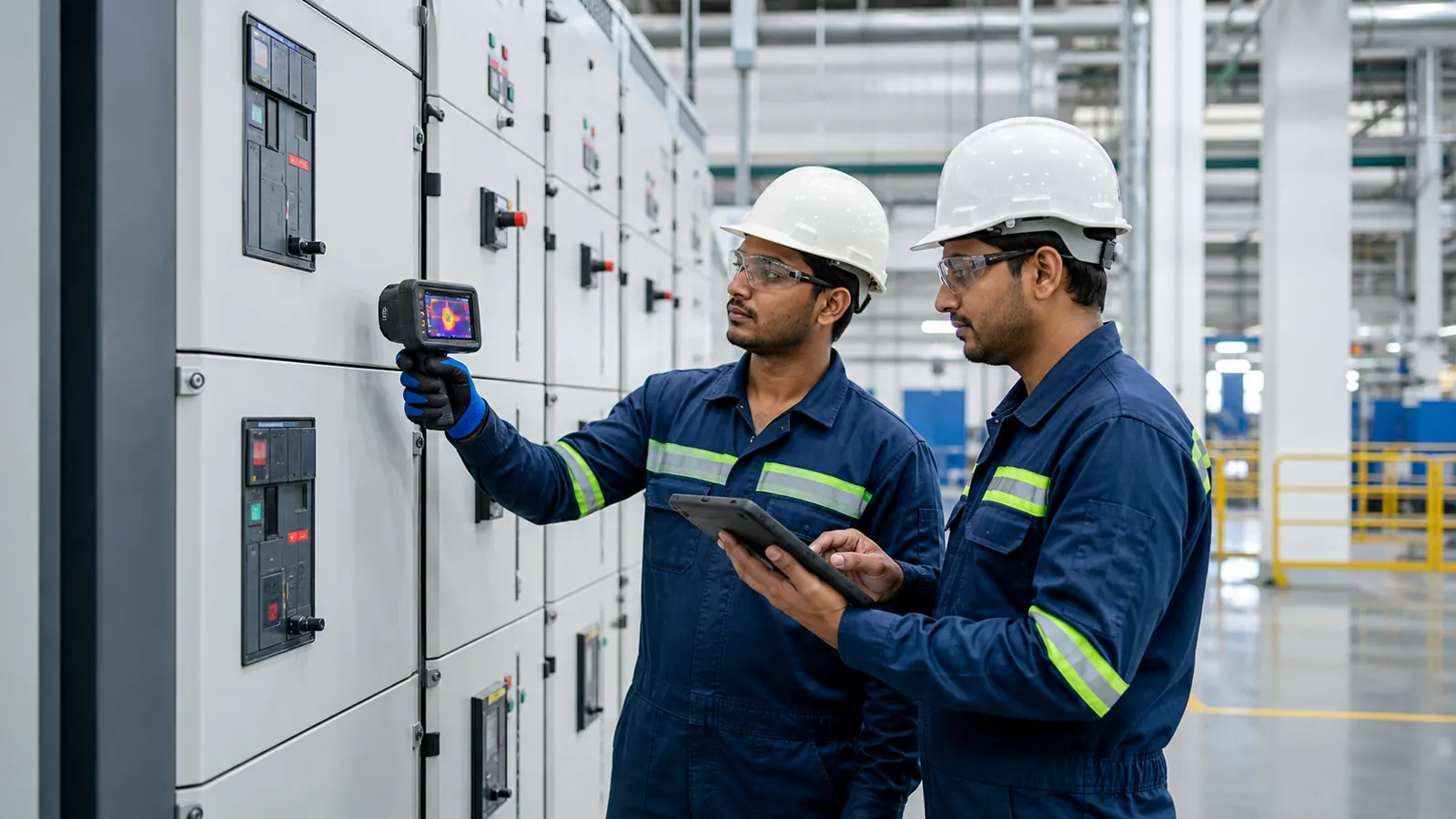
Electrical failures in industrial plants don't just happen overnight. They are usually preceded by a gradual increase in temperature. Electrical thermography allows facility managers to "see" these thermal anomalies before they lead to catastrophic equipment failure.
Why Visual Inspections Are Not Enough
Traditional visual inspections often miss loose connections, overloaded circuits, and phase imbalances because they are hidden behind panels or operate normally on the surface. Thermography uses infrared imaging to detect heat emitted by electrical components, pinpointing exactly where the stress is occurring.
Major Benefits of Thermography Surveys
- Preventing Unexpected Downtime: By identifying a failing component early, you can schedule maintenance during planned outages rather than suffering a sudden halt in production.
- Reducing Fire Risks: Excess heat is a leading cause of electrical fires. Thermography is a critical part of fire prevention.
- Prolonging Equipment Lifespan: Operating under thermal stress degrades equipment faster. Fixing issues early extends the life of motors, transformers, and switchgears.
A bi-annual thermography scan of all critical electrical panels and transformers has a proven ROI by drastically reducing the probability of unplanned outages.
Survey conditions determine the value of the result
Record circuit load, ambient temperature, equipment identity, enclosure condition, and a comparable reference for every important image. Scan during representative production wherever it is safe to do so. Without load context, a temperature alone can lead teams to repair a normal component or overlook a serious high-resistance joint that was lightly loaded during inspection.
Prioritise and verify
Rank findings using temperature difference together with load, asset criticality, fire exposure, and the consequence of failure. Assign an owner and completion date, then re-scan after repair under comparable load. The verification image is the evidence that the cause was removed-not merely that a work order was closed.
Technical Standards & Regulatory References
For infrared thermography protocols, equipment maintenance standards, and thermal anomaly ratings, refer to:
- ISO 18434-1:2008: Condition monitoring and diagnostics of machines - Thermography - Part 1: General procedures.
- NFPA 70B: Standard for Electrical Equipment Maintenance (Infrared Inspection Frequencies & Severity Ratings).
- ASTM E1934: Standard Guide for Examining Electrical and Mechanical Equipment with Infrared Thermography.
- NETA Maintenance Testing Specifications (NETA-MTS): Thermographic survey evaluation guidelines and Delta-T temperature evaluation criteria.
For details on how standards, evidence, and estimates are interpreted across our engineering services, see our Claims, Evidence & Attribution guidelines.