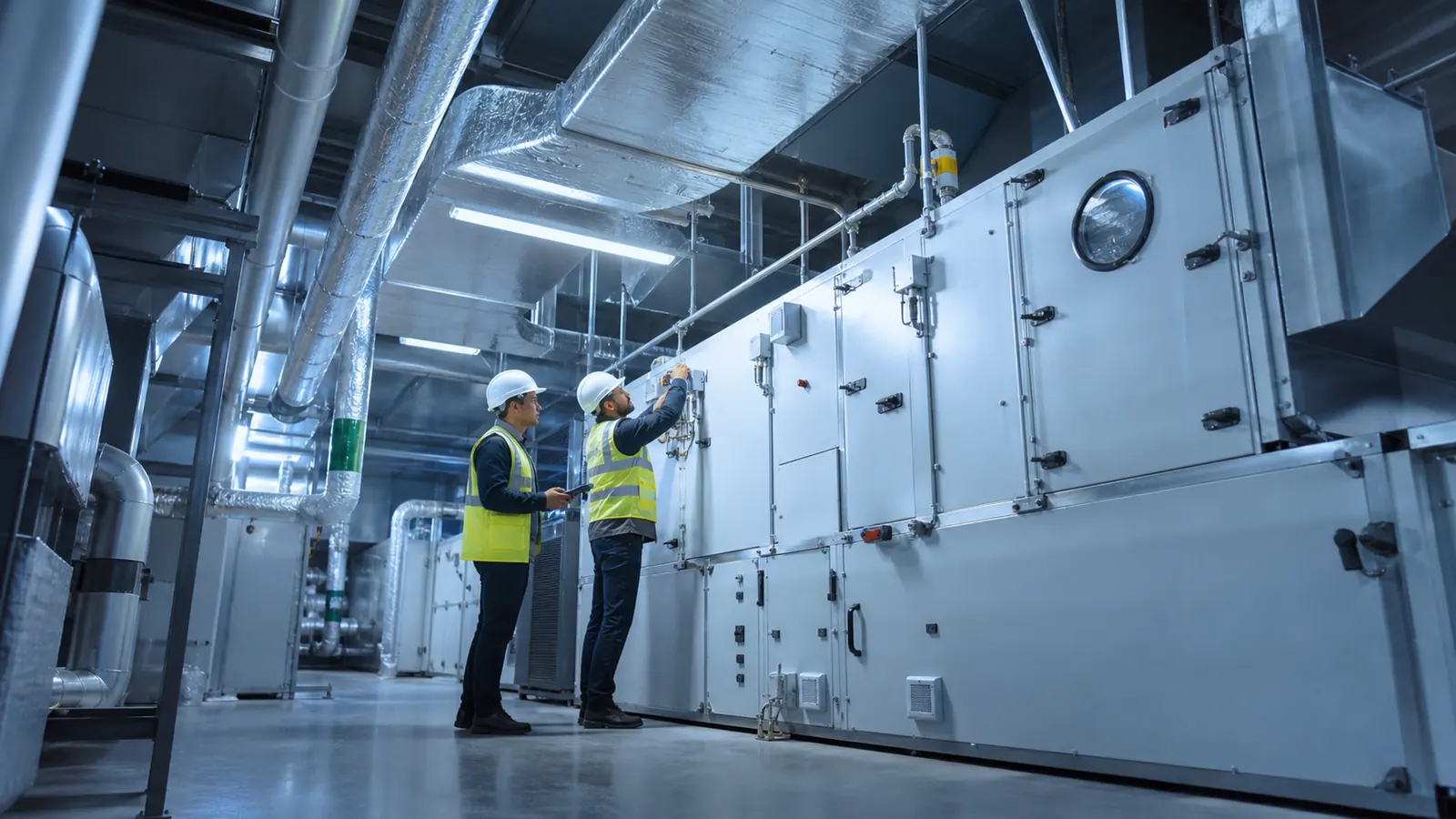
In large industrial and commercial facilities, Heating, Ventilation, and Air Conditioning (HVAC) systems can account for 40% to 60% of total energy consumption. Keeping these systems running optimally is vital for both cost savings and sustainability goals.
1. Routine Filter Maintenance
Clogged filters force fans to work harder, significantly increasing energy draw. Depending on your facility's environment, filters need to be inspected monthly and replaced quarterly at a minimum.
2. Duct Cleaning and Air Balancing
- Robo Duct Cleaning: Removing debris buildup improves airflow and indoor air quality (IAQ). Use robotic cleaning for hard-to-reach industrial ductwork.
- Air Balancing: Unbalanced systems cause some areas to over-cool while others remain hot. Professional air balancing ensures even distribution, reducing the strain on chiller units.
3. Chiller Tube Cleaning
For water-cooled chillers, scaling inside the condenser tubes acts as an insulator, reducing heat transfer efficiency. Regular descaling and tube cleaning can yield immediate improvements in coefficient of performance (COP).
A meticulously maintained HVAC system not only saves up to 20% on cooling costs but also creates a safer, healthier environment for your workforce.
Diagnose before replacing equipment
High consumption can come from dirty heat-transfer surfaces, incorrect airflow, leaking ducts, unstable sensors, poor sequencing, simultaneous heating and cooling, or setpoints that no longer match occupancy and process needs. Measure temperature, humidity, flow, pressure, power, and run hours together. Replacing a major component before checking these basics can preserve the original problem at a much higher cost.
Use a seasonal scorecard
Trend energy per cooling output, approach temperatures, filter pressure drop, chilled-water temperature difference, room comfort complaints, and avoidable run hours. Review changes after cleaning or control work so preventive maintenance is scheduled by evidence rather than by a calendar alone.
Technical Standards & Regulatory References
For industrial HVAC maintenance, indoor air quality, and building energy performance, refer to:
- ASHRAE Standard 62.1-2022: Ventilation for Acceptable Indoor Air Quality in commercial and industrial facilities.
- ASHRAE Standard 90.1-2022: Energy Standard for Buildings Except Low-Rise Residential Buildings.
- ISHRAE Standard 10001:2019: Code of Practice for Indoor Air Quality in Indian Commercial & Industrial Buildings.
- ISO 16890:2016: Air filters for general ventilation - Particulate matter efficiency classification (ePM1, ePM2.5, ePM10).
For details on how standards, evidence, and estimates are interpreted across our engineering services, see our Claims, Evidence & Attribution guidelines.